
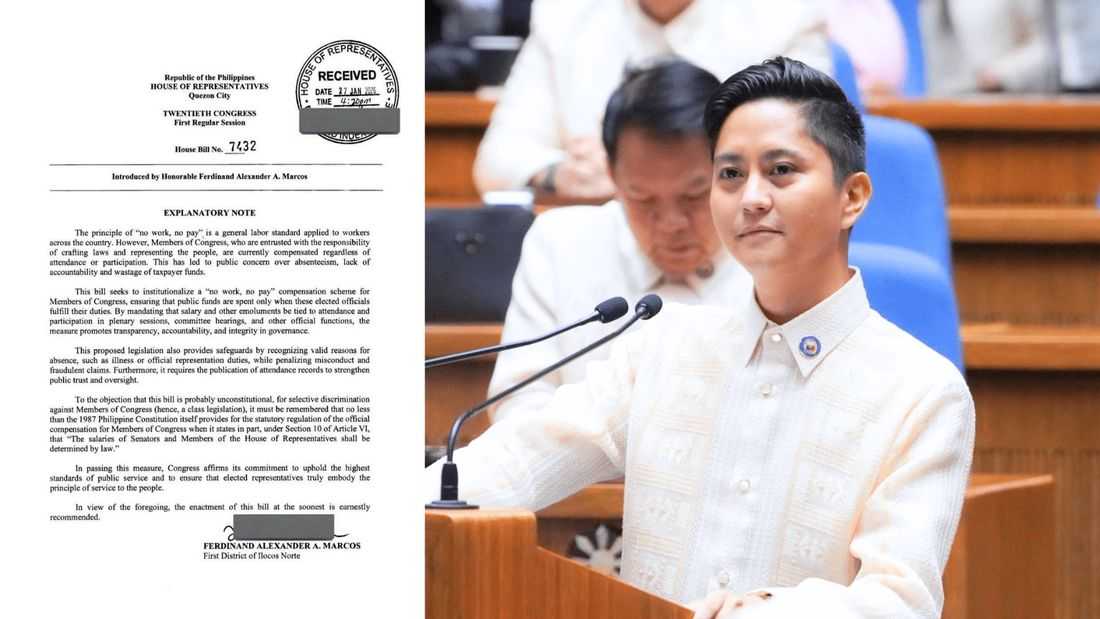
House Majority Leader Sandro A. Marcos has filed a bill proposing a strict “no work, no pay” scheme for members of Congress to address absenteeism and ensure the proper use of public funds.
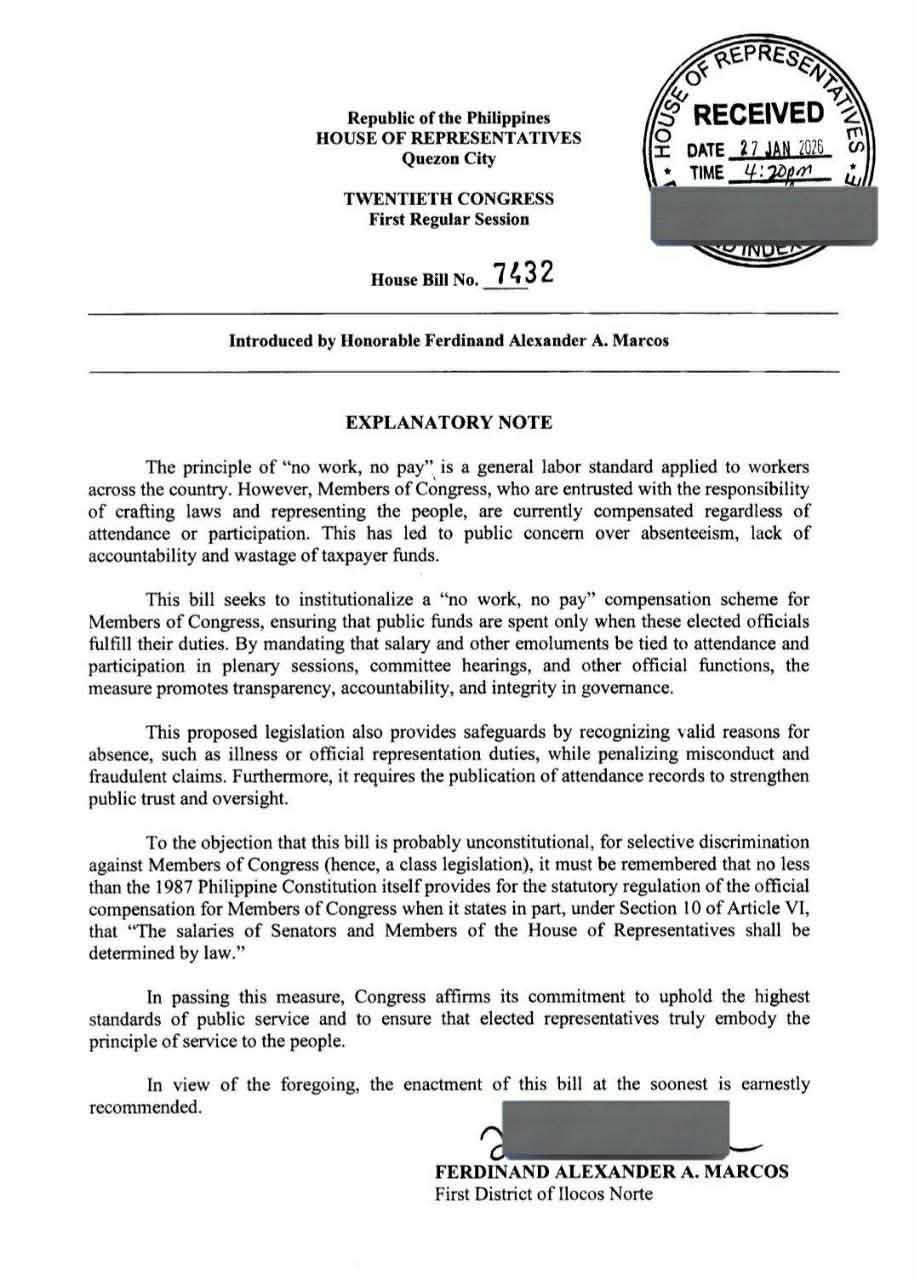
Filed as House Bill No. 7432, or the “No Work, No Pay for Members of Congress Act,” the measure seeks to tie the salaries and other benefits of senators and representatives to their actual attendance and participation in official legislative duties, including plenary sessions, committee hearings, and other authorized activities.
In the bill’s explanatory note, Marcos said that while the “no work, no pay” principle is widely applied to workers in the country, members of Congress continue to receive compensation regardless of attendance. He said this has raised concerns over accountability and the use of taxpayer money.
“The principle of ‘no work, no pay’ is a general labor standard applied to workers across the country. However, Members of Congress, who are entrusted with the responsibility of crafting laws and representing the people, are currently compensated regardless of attendance or participation,” Marcos said.
Under the proposed measure, lawmakers will be paid only for days when they are present and performing official work. Unexcused absences will result in the loss of compensation, while valid absences will be allowed for reasons such as illness, approved official travel, authorized representation, and sanctioned leaves of absence.
The bill considers lawmakers present when attending authorized committee meetings, sessions of the Commission on Appointments, the House of Representatives Electoral Tribunal, bicameral conference committees, and other official missions approved by chamber leaders.
To promote transparency, the measure requires daily attendance monitoring by both chambers and makes attendance records publicly available. Salaries will be released only based on verified attendance.
The proposal also includes penalties for falsifying attendance records or claiming compensation without performing official duties, which will be treated as misconduct under existing congressional rules.
Marcos said the measure aims to strengthen accountability in Congress and ensure that lawmakers are paid only when they perform their duties.
