
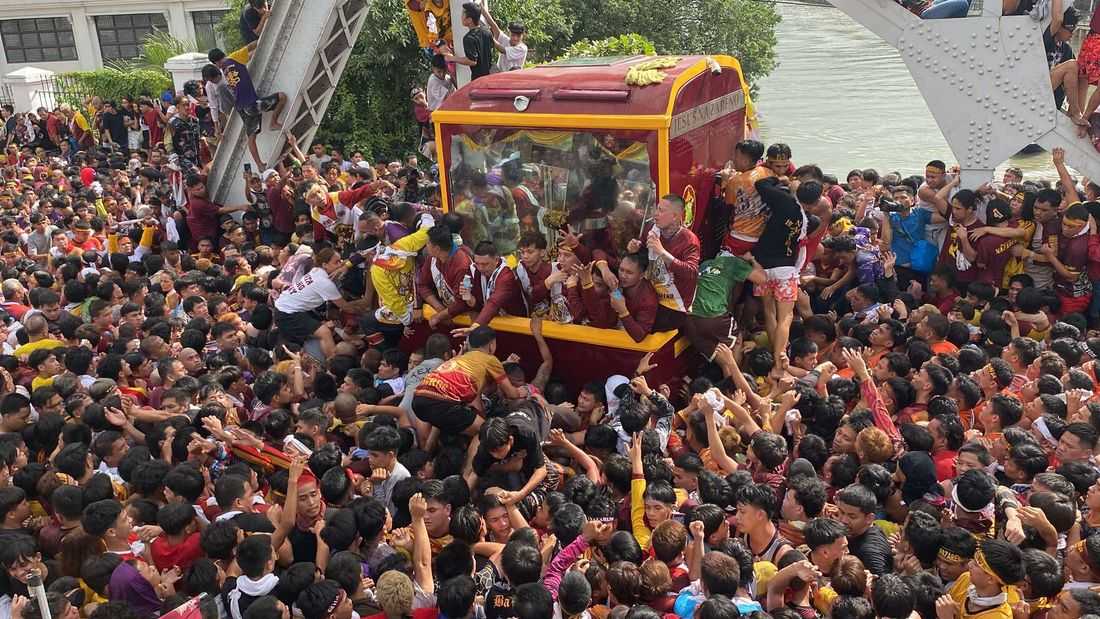
Every year, thousands of devotees flock to Manila to take part in the Traslacion, the grand procession of the image of Jesus Nazarene. For many Filipinos, participation is an expression of faith, hope, or gratitude—a part of their “panata” or vow.
According to the National Museum of the Philippines, a panata is “usually carried out as a plea to God or as thanksgiving for healing, blessing or granting of/granted wish.” From barefoot pilgrimages to wiping the image with towels, the ways Filipinos have found to demonstrate their devotion are widely shared while deeply personal.
Barefoot walk
Traditionally, devotees walk the 6.5-kilometer Traslacion route barefoot, as a symbolic gesture emulating Jesus Christ’s suffering as he carried the cross to Golgotha—which, in Aramaic, means “the place of the skull”—where he was crucified.
This act is done either as a form of penance to atone for sins or to convey profound thanksgiving for prayers that have been answered.
Holding the carriage rope
It has become a practice for devotees to touch or pull the ropes that pull the “andas” or carriage bearing the image of Jesus Nazarene, believing that physical contact with the religious object brings them closer to God and may lead to blessings or answered prayers.
Towels to wipe the image with
When they are able, devotees would throw their towels or handkerchiefs to the Hijos del Señor Nazareno (who serve as the event marshals and guardians of the image) who wipe the image of the Jesus Nazarene with them. Afterwards, they return these to the crowd.
Devotees then keep the towels as sacred relics, having touched the image of Christ, believing these to be sacred and with miraculous properties.
Long after the andas have passed, devotees return to their daily lives carrying the same prayers that brought them to the Traslacion. Whether these acts of faith were done in gratitude or in longing, they reflect how deeply panata continues to shape Filipino religiosity.
