
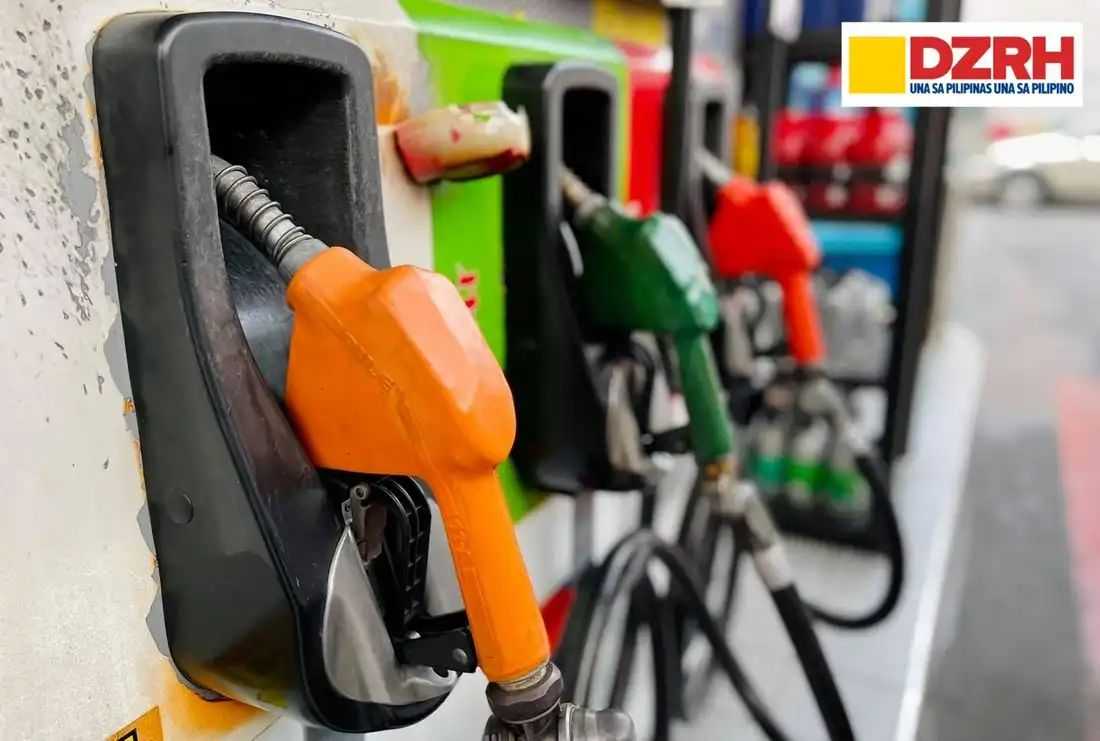
Fuel prices are set to increase by P17 to P24 per liter this week, Energy Secretary Sharon Garin announced Monday, March 9.
During the House Committee on Ways and Means hearing on fuel excise taxes, Garin clarified that the hike will be implemented gradually over seven days instead of in a single jump.
She added that the price adjustments will start Tuesday, March 10, and continue through Monday, March 16.
"It's not the highest [price] in history. But the one that will be implemented tomorrow will be the highest jump," she said.
The Department of Energy (DOE) explained that oil companies agreed to a staggered approach to ease the impact on consumers.
“They have agreed to [stagger], stagger in a sense of in a whole week, hindi isang bagsakan na P20 pesos kaagad na tomorrow, some company agreed na P 2.50 lang. Some companies agreed P10 pesos for tomorrow,” Garin said.
Some companies will raise prices by as little as P2.50 per liter on Tuesday, while others will implement increases of up to P10.
The range of the price hike for diesel this week is between P17 and P24 per liter, varying by company, Garin said.
Garin also noted that future price changes are uncertain due to ongoing tensions in the Middle East, which supplies 98% of the Philippines’ crude oil.
She explained that the government cannot control domestic oil prices because the industry is deregulated.
The Energy Secretary further clarified why prices are rising even when gas stations are still selling older stock, "It's the replacement cost. Even if the crude arrives here, its price is not based on the date of delivery. As a practice, we compute the historical average of the week, which is used to assume the cost of purchasing new stock."
Despite the increase, Garin assured that the Philippines has sufficient fuel supply until April.
The Middle East conflict began on February 28, when Israel, in coordination with the United States, launched airstrikes targeting Iran, killing Iranian leaders. Retaliatory attacks have since disrupted global markets and heightened uncertainty in oil supply.
