
The Philippine Institute of Volcanology and Seismology (PHIVOLCS) reported continued high activity at Mayon Volcano as of 12:00 a.m., February 1, 2026, maintaining the volcano at Alert Level 3.
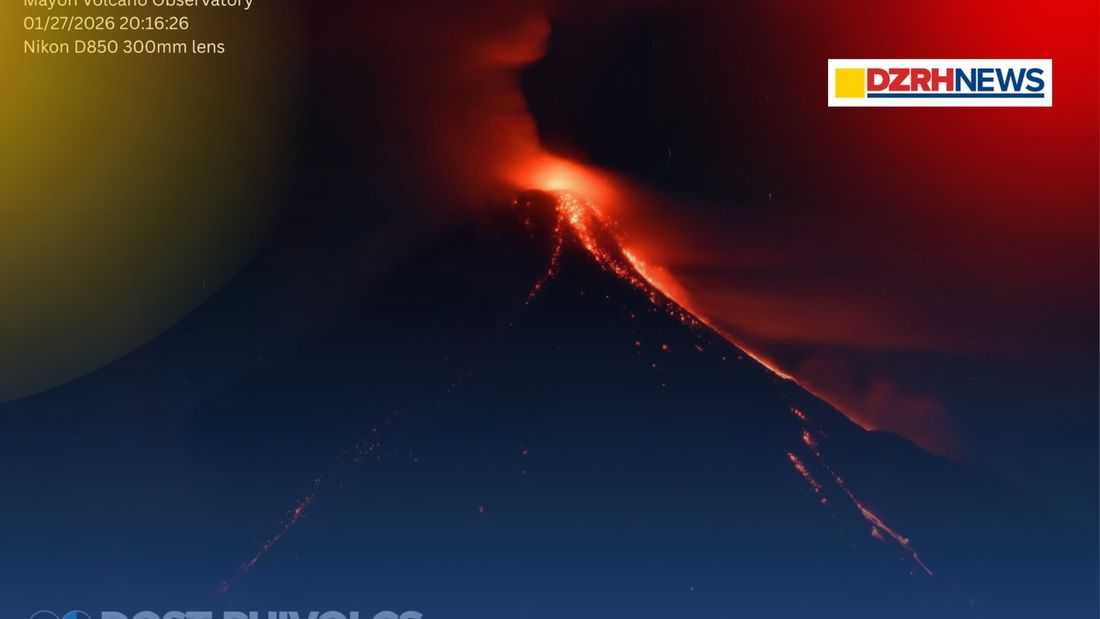
Monitoring over the past 24 hours showed lava dome extrusion and ongoing lava flows, indicating sustained magmatic movement at the summit.
PHIVOLCS recorded 4 volcanic earthquakes, 389 rockfall events, and 26 pyroclastic density currents (PDCs), while a visible crater glow was observed at night. The volcano’s sulfur dioxide (SO₂) emission reached 4,079 tons per day as of January 31, signaling continued degassing from rising magma. The edifice also showed signs of ground swelling, a key indicator of pressure buildup beneath the volcano.
The volcano was partly obscured by clouds during observation, but steaming activity and summit incandescence were noted when visibility allowed. These parameters point to an elevated likelihood of hazardous eruptions should activity further intensify.
Under Alert Level 3, PHIVOLCS strictly prohibits entry into the 6-kilometer Permanent Danger Zone (PDZ) and warns against accessing the Extended Danger Zone (EDZ) without authorization.
Aircraft are also advised to avoid flying close to the volcano due to possible ash and ejecta.
Residents in surrounding communities are advised to remain alert for potential hazards, including rockfalls, lava flows, ashfall, moderate explosions, and lahar flows during heavy rains.
Mayon Volcano is located in the province of Albay, where local authorities continue to coordinate preparedness measures in line with PHIVOLCS’ advisories.
