

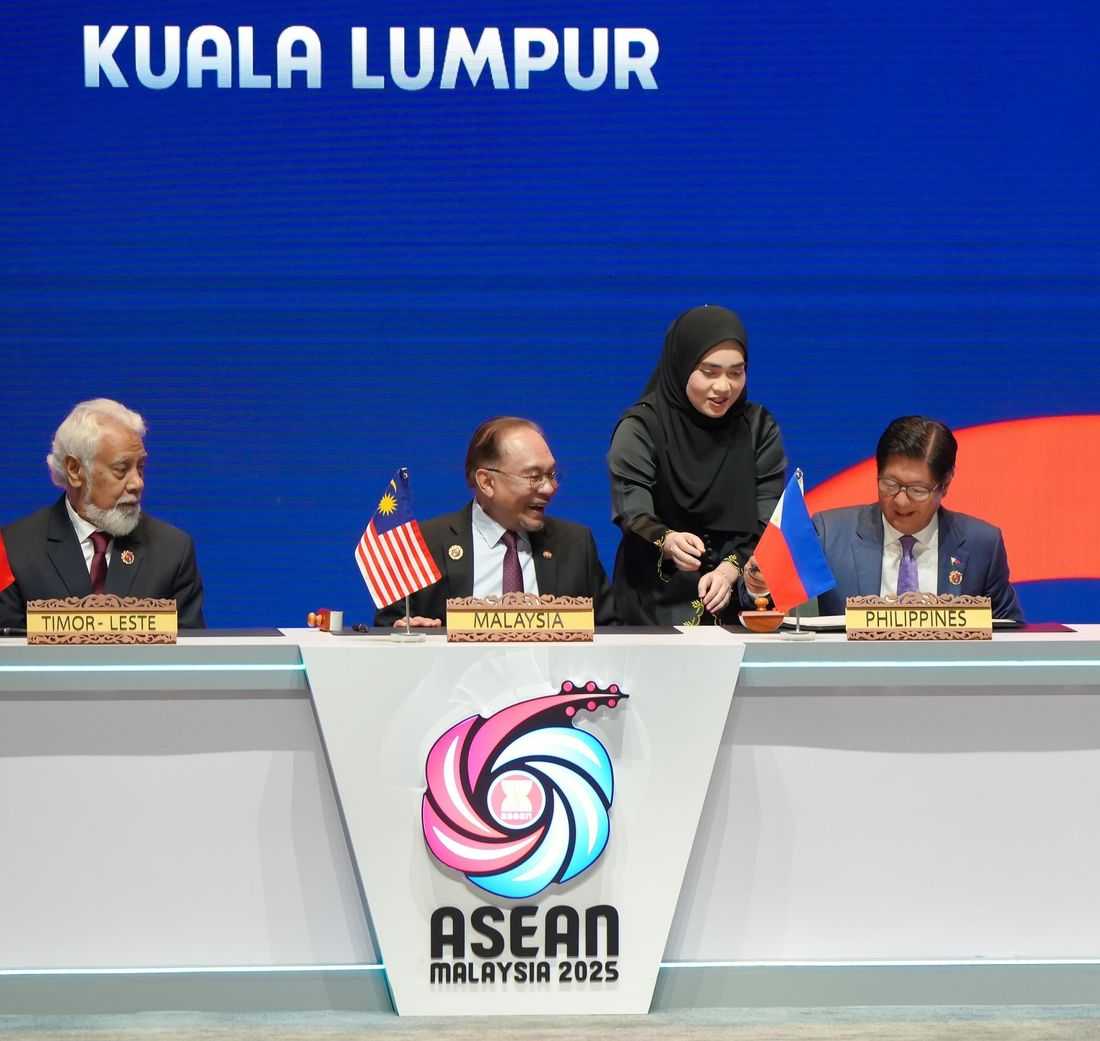
President Ferdinand R. Marcos Jr. had bilateral meeting with leaders from Cambodia, Thailand, Canada, the European Union, and Japan on Sunday on the sidelines of the 47th ASEAN Summit and Related Summits at the Kuala Lumpur Convention Centre (KLCC) in Malaysia.
The meetings were part of Marcos’ series of bilateral engagements with leaders aimed at strengthening the Philippines’ international partnerships and advancing regional cooperation.
Marcos said he had a productive meeting with Cambodian Prime Minister Hun Manet, during which both leaders welcomed Cambodia’s strong support for the Philippines as the incoming ASEAN Chair. The two agreed to work closely together in strengthening regional cooperation and in promoting peace and stability in the region.
Marcos said that Canada and the Philippines agreed to strengthen cooperation in trade, investment, and energy, and to engage constructively as the Philippines takes on the Chairship of ASEAN in 2026.
He also met with Prime Minister Anutin Charnvirakul of Thailand, where both Southeast Asian leaders agreed to boost ties in areas of cooperation such as "trade, education, agriculture, and economic growth" for the benefit of their peoples.
Meanwhile, the President also held talks with European Council President António Costa, who expressed the EU’s well wishes and full support for the Philippines as it prepares to assume the ASEAN Chairship next year.
The two leaders agreed to "push forward trade negotiations and reaffirmed their shared commitment to multilateralism and a rules-based international order" and building on their partnership to deliver greater stability and prosperity for their peoples.
Marcos also met with Japan's first female Prime Minister, Takaichi Sanae, whom he congratulated.
Marcos said that Japan will continue to further strengthen Philippines' Strategic Partnership in maintaining peace and stability and advancing prosperity in the region.
The meeting highlighted the Philippines’ growing role as a bridge between Southeast Asia and Europe, particularly in advancing dialogue on economic cooperation, environmental sustainability, and security challenges.
