
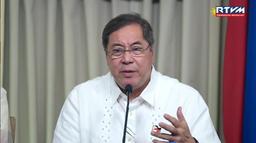

The Department of Health (DOH) on Wednesday said the presence of a new “superflu” variant in the Philippines is not a cause for concern, even as the cases have been detected through routine surveillance, Health Secretary Teodoro Herbosa announced.
During a press conference in the Palace, Herbosa said that a total of 17 cases of the new influenza variant have been identified in the country. All affected patients have since recovered.
“Actually, we detected superflu here,” Herbosa said, explaining that the cases were discovered during a review of Epidemiology Bureau surveillance data.
He noted that detections date back to July and August last year and were part of the country’s regular disease monitoring system.
The health chief clarified that the reported cases were found in Metro Manila and emphasized that there has been no indication of severe outcomes or unusual spread linked to the variant.
Despite this, the DOH reminded the public—particularly Filipinos planning to travel abroad—to take extra precautions.
“But there is a new variant out there, I think the warning that I will be giving for Filipinos that will travel to the—that will [travel] through North America, in [the] UK [United Kingdom] if you are going to be knowledgeable that there is a spread of superflu in that area, maybe get the northern hemisphere vaccine,” Herbosa said.
He added that travelers heading to temperate countries such as the United Kingdom and North America should consider getting vaccinated with the northern hemisphere influenza vaccine, which is different from the southern hemisphere formulation typically administered in the Philippines.
Herbosa stressed that vaccination remains especially important for high-risk groups, including the elderly and those with underlying health conditions.
“As long nakapagpa-vacccinate yung high risk, if you are young individuals you get flu the same precautions public health precautions,” he said. For younger and generally healthy individuals, he advised following standard public health measures.
“If you are sick, stay at home,” Herbosa said. He also urged those experiencing upper respiratory symptoms to wear masks to prevent the spread of the virus.
The DOH reiterated basic flu prevention measures, including covering one’s mouth when coughing or sneezing, practicing good hygiene, and getting the flu vaccine as advised.
