
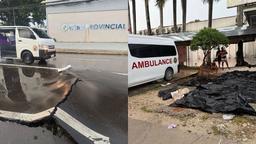
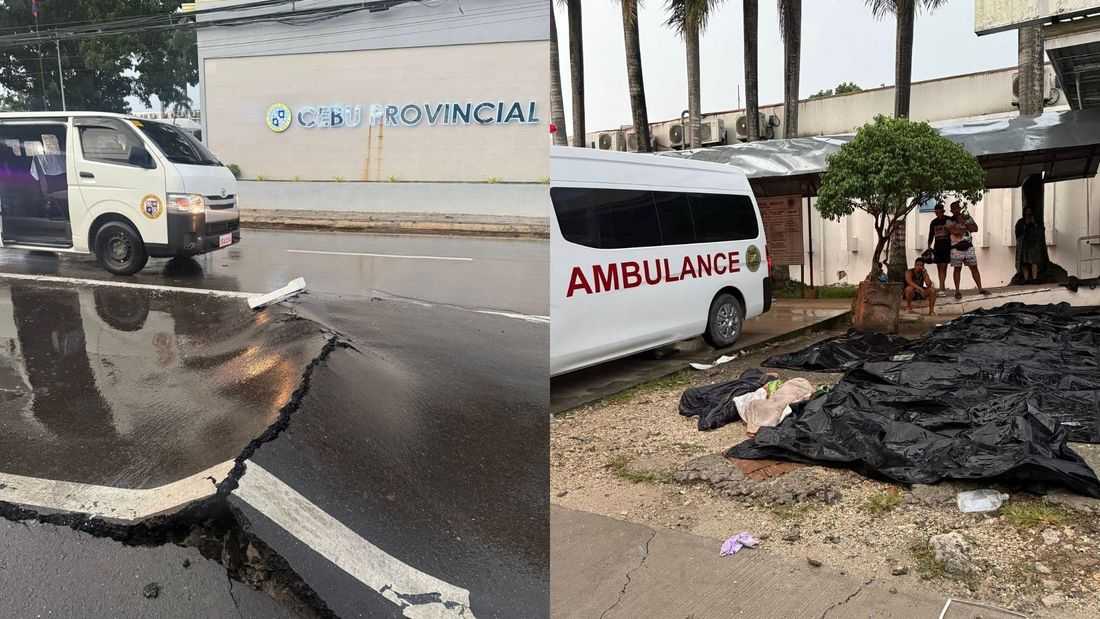
A powerful 6.9-magnitude earthquake struck northern Cebu late Tuesday night, leaving widespread destruction across several towns and cities, with NDRRMC confirming at least 26 dead and 147 injured as of Wednesday morning.
The tremor, which originated offshore from active faults northeast of Cebu Island, triggered massive damage to infrastructure, homes, and public facilities. The Philippine Institute of Volcanology and Seismology (PHIVOLCS) reported the epicenter was located about 19 kilometers north and 70 kilometers east of Bogo City.
Severe Damage in Medellin and Bogo
DZRH News FM Cebu Station Manager Louie Reyes, who was in Medellin during the quake, reported heavy casualties and infrastructure collapse in the municipality.
“Sa municipality of Medellin where the station is located, more than 10 fatalities, marami mga bata,” Reyes said.
According to Reyes, two main bridges leading into the town proper were rendered impassable, forcing trucks and other vehicles to reroute. Electricity and water supply were cut off in the area, while residents endured multiple strong aftershocks overnight, including jolts felt as late as 4:40 a.m.
In Bogo City, the epicenter of the quake, several roads split open, creating large ground fissures and forcing traffic enforcers to redirect vehicles.
Sports Complex Collapse in San Remigio
South of Bogo, in San Remigio, a basketball game being held inside a sports complex turned tragic when the building collapsed during the earthquake. Initial reports indicated that more than 10 individuals were trapped beneath the rubble.
Hospitals also struggled to cope with the influx of patients, many of whom had to be transferred to makeshift evacuation centers.
With medical personnel stretched thin, emergency responders faced severe challenges, including cases of pregnant women forced to give birth outdoors, as stated by Reyes.
Medellin Mayor Edwin Salimbangon has since deployed tents to shelter displaced patients and residents.
PHIVOLCS on Aftershocks and Tsunami Advisory
PHIVOLCS Director Dr. Teresito Bacolcol reported that as of 3 a.m., the agency had recorded 347 aftershocks, the strongest at magnitude 4.8. He warned that aftershocks are expected to continue for several weeks.
Bacolcol urges the public to follow safety protocols such as ‘duck, cover, and hold’ especially if strong aftershocks occur.
He also advised homeowners to have their properties assessed by engineers before returning to damaged structures.
Last night, PHIVOLCS issued a tsunami information bulletin after detecting minor sea level disturbances between 9:59 p.m. and 11:20 p.m. Tuesday. However, no significant wave activity was reported, and the advisory was lifted at 1:20 a.m.
As of writing, the Cebu Provincial Information Office reported that 27 fatalities have been verified in Bogo City, with the number expected to rise as assessments continue in harder-hit rural areas.
